Unlocking Dental Prosperity: How AI Revolutionizes Clinical Economics
Unlocking Dental Prosperity: How AI Revolutionizes Clinical Economics
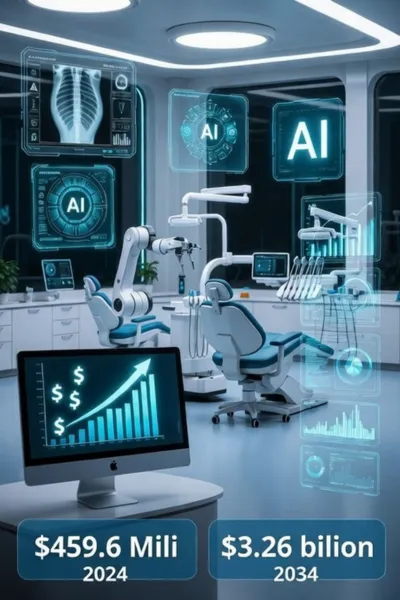
In the evolving landscape of dentistry, a new paradigm is emerging: Clinical Economics. This term encapsulates the strategic fusion of clinical excellence and economic viability, ensuring dental practices not only deliver top-tier patient care but also thrive financially. At the heart of this transformation is Artificial Intelligence (AI), poised to skyrocket the dental sector's value from $459.6 million in 2024 to an astonishing $3.26 billion by 2034. Driven by the demand for enhanced diagnostics and clinical efficiency, AI is not just a tool—it's a game-changer for sustainable growth.
Imagine a world where routine dental check-ups become precision-driven experiences. AI-powered imaging tools, like those analyzing X-rays and CBCT scans, detect cavities, periodontal diseases, and even early signs of oral cancer with unparalleled accuracy. Traditional diagnostics often rely on human interpretation, which can be time-consuming and prone to oversight. AI algorithms, trained on vast datasets, flag anomalies in seconds, reducing diagnostic errors by up to 30%. This isn't science fiction; it's already happening in forward-thinking clinics, where AI integration streamlines workflows and minimizes costly rework.
From a Clinical Economics perspective, the benefits are profound. Enhanced diagnostics mean fewer missed diagnoses, leading to proactive treatments that prevent expensive complications down the line. For instance, early detection of gum disease through AI can avert the need for invasive surgeries, saving practices thousands per patient while improving outcomes. Moreover, AI optimizes appointment scheduling and resource allocation. Predictive analytics forecast patient no-shows or peak demand periods, allowing clinics to maximize chair time and revenue. A study highlights that AI-driven efficiency can cut operational costs by 15-20%, directly boosting profitability without compromising care quality.
The market surge underscores this momentum. North America leads the charge, fueled by rapid technological adoption and supportive regulations. Companies like Overjet and VideaHealth are pioneering AI solutions tailored for dentistry, offering tools that integrate seamlessly with existing EHR systems. These innovations extend beyond diagnostics—AI assists in treatment planning, simulating outcomes for procedures like implants or orthodontics, ensuring personalized plans that enhance patient satisfaction and loyalty.
Yet, Clinical Economics isn't just about cutting costs; it's about value creation. By automating mundane tasks, dentists reclaim time for complex cases and patient interactions, fostering stronger relationships that drive referrals and repeat business. In an era of rising overheads—from staff salaries to equipment maintenance—AI provides a hedge against inflation. Practices adopting AI report higher reimbursement rates due to more accurate coding and documentation, further amplifying economic returns.
As we approach 2034, the AI boom in dentistry promises a ripple effect. Smaller practices, often strapped for resources, can level the playing field with affordable cloud-based AI platforms. This democratization ensures that Clinical Economics benefits all, from urban specialists to rural clinics. However, success hinges on ethical implementation—ensuring data privacy and clinician oversight to maintain trust.
In conclusion, AI's trajectory in dentistry exemplifies Clinical Economics at its finest: marrying innovation with fiscal prudence. Practices that embrace this shift will not only survive but flourish, delivering superior care while securing their economic future. The question isn't if AI will transform dentistry—it's how soon your practice will join the revolution.